
Why the Future of Healthcare Begins at Home — and How AI Makes It Possible
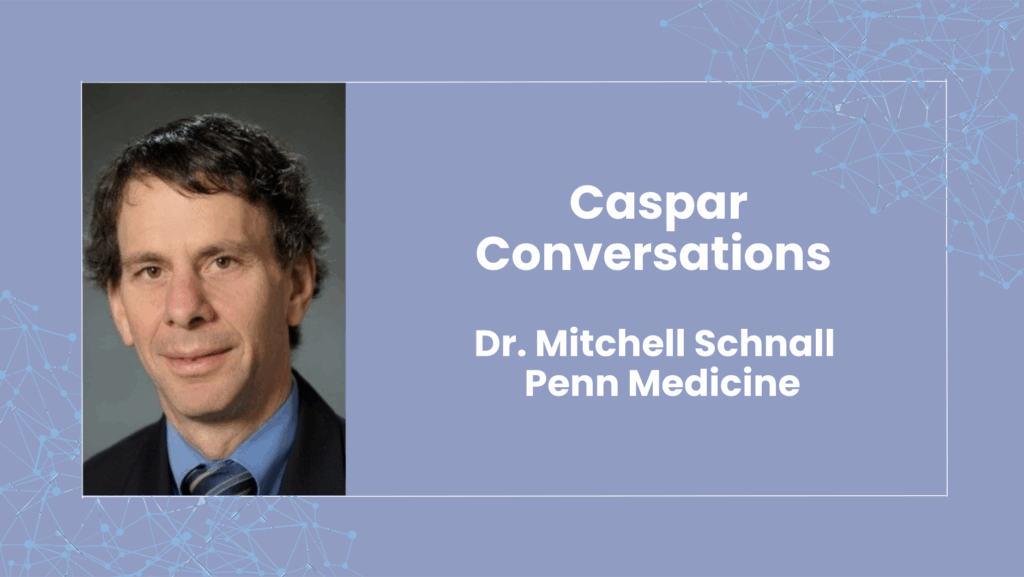
“Medicine is under so much pressure right now. [AI] is one of the tools that can help us reimagine how we take care of patients.”
— Dr. Mitchell Schnall, Pendergrass Professor of Radiology, University of Pennsylvania
Few people understand the evolving pressures of modern medicine better than Dr. Mitchell Schnall. As a physician, researcher, and leader at Penn Medicine, he’s spent decades navigating the intersection of technology and patient care. His message is clear: Artificial intelligence isn’t just another innovation — it’s a critical tool for redesigning how and where care happens. And increasingly, that care is happening at home.
The Shift Toward the Home
The past several years have accelerated the move to home-centered care. Programs like Penn Medicine’s hospital-at-home and expanded home health models are gaining traction worldwide, driven by aging populations, clinician shortages, and the need to reduce strain on healthcare systems.
Home care offers profound benefits, including comfort, lower costs, and often better outcomes. But for clinicians, it also creates a visibility challenge. Without continuous data, it’s difficult to detect subtle changes in health that can lead to falls, infections, or medication complications.
Dr. Schnall notes: That’s where AI can fill the gap, offering a way to see what was previously invisible.
Turning Data Into Intelligent Insight
The healthcare industry has plenty of data, but much of it isn’t delivered in a way care teams can easily understand. AI can synthesize massive amounts of data into actionable intelligence.
Today’s innovations use a mix of technologies, ranging from radar-based motion sensors to EHR data streams, to passively monitor wellbeing and detect risk early. These systems can identify changes in mobility, sleep, or vital signs that may signal decline well before symptoms become obvious.
But as Dr. Schnall points out: For AI to truly support care, it must integrate into clinical routines, surfacing insights at the right moment and in the right context. The best systems operate quietly in the background, helping to direct clinicians’ judgement but not meant to replace it.
Preventative Care Moves to the Forefront
This kind of continuous, intelligent monitoring allows healthcare teams to move from reactive to preventative care. Instead of responding to crises, clinicians can intervene before a fall, a pressure injury, or a medication reaction occurs.
And unlike traditional monitoring approaches, these tools can work unobtrusively, without cameras or wearables. AI can also create a profile of a person’s overall health, providing a holistic view that even in hospitals struggle to achieve.
Extending the Reach of Care
When clinicians can access meaningful insights, they can spend less time piecing together data and more time focusing on the human connection at the heart of care.
As Dr. Schnall reminds us, the promise of AI isn’t in its novelty, but in its ability to help medicine evolve: “It’s one of the tools that can help us reimagine how we take care of patients.”
That reimagination starts in the home, signaling a new era of healthcare that is preventative, personalized, and truly centered around the patient.