Healthcare is entering a new era of continuous insight.
AI-powered monitoring systems can now – more than ever – help detect changes earlier, reduce avoidable hospitalizations, support overburdened staff, and provide families with greater peace of mind between visits and check-ins.
But as these technologies become more embedded in care delivery, an important question emerges:
How do we use AI to strengthen care — without making care feel more invasive, impersonal, or transactional?
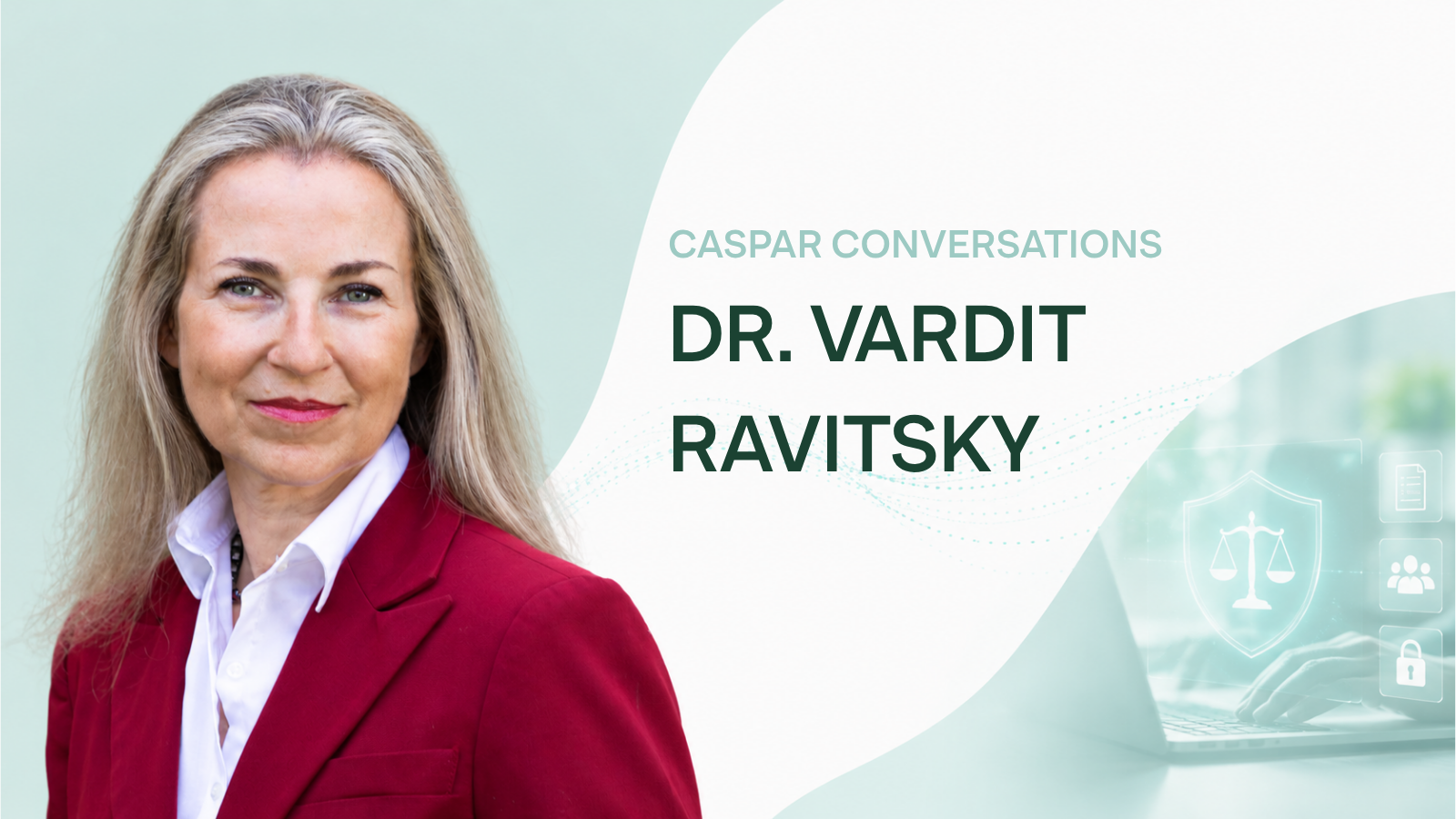
In a recent conversation with Dr. Vardit Ravitsky, President and CEO of The Hastings Center for Bioethics, we explored what ethical healthcare AI should actually look like in practice – and central to that is respecting patient dignity.
As Dr. Ravitsky explained:
“To respect dignity means to always prioritize the agency that patients retain when the technology is present.”
That idea matters deeply in healthcare environments where patients are often vulnerable, families are under stress, and caregivers are already stretched thin.
Better Visibility Shouldn’t Come at the Expense of Trust
Our conversation repeatedly returned to one core principle: thoughtful, proportional use of data. As Dr. Ravitsky noted, healthcare AI should focus on collecting “the right data for the right goal, governed in the right way.”
For Caspar, this principle has shaped our approach from the beginning.
Our platform was intentionally designed to deliver actionable clinical insight without relying on cameras, wearables, or invasive forms of monitoring. Not because privacy is simply a feature — but because dignity and trust are foundational to sustainable care.
That distinction matters.
As Dr. Ravitsky pointed out, camera-free technology is often ethically preferable, but it is not automatically ethical on its own. The real responsibility lies in how technology is implemented, governed, and integrated into care workflows.
AI Should Support Caregivers — Not Replace Them
Another important insight centered on the growing risk of overreliance on AI in healthcare.
“The better the technology, the more we’re vulnerable to removing ourselves from the loop.”
That idea resonates strongly across senior care and healthcare environments today.
The goal is that technology reduces burden but not human connection.
At Caspar, we believe AI works best when it operates quietly in the background:
- surfacing risk earlier,
- helping caregivers prioritize attention,
- and enabling more proactive interventions.
Not replacing clinical judgment. Not replacing relationships. And not replacing the human intuition that sits at the center of great care.
The goal isn't fewer personal interactions—it's helping caregivers spend more time where they matter most, while equipping patients and families with transparent, easy-to-understand insights that foster trust, spark meaningful conversations, and support more informed decisions together.
The Future of Healthcare AI Isn’t Just About Transparency
In closing, Dr. Ravitsky reflected on one of the foundational debates in healthcare AI: the “black box” concept.
Historically, much of the focus in AI ethics has centered on explainability — the belief that if clinicians or patients couldn’t fully understand how a system reached a conclusion, it shouldn’t be trusted.
But Dr. Ravitsky suggested the conversation is shifting.
Today, the more important questions may be:
- Is the system reliable?
- Is it clinically effective?
- Is it accountable when something goes wrong?
- Does it support better care decisions?
As she pointed out, human decision-making can also function as a kind of “black box”:
“You don’t know exactly how up-to-date clinicians are on the literature, [or] how tired they are.”
That doesn’t mean transparency no longer matters. But it does mean healthcare AI should be evaluated by more than explainability alone.
At Caspar, we believe AI works best when it helps care teams make more informed, proactive, and compassionate decisions — while keeping people firmly at the center of care.
About Dr. Vardit Ravitsky
Vardit Ravitsky is President and CEO of The Hastings Center for Bioethics, where her work focuses on the ethics and governance of health AI. She also contributes to initiatives including Bridge2AI and the National Academy of Medicine’s AI Code of Conduct efforts focused on responsible healthcare AI implementation.